Calculate opportunities before the price
Count how often the agreed task can realistically happen, not how often you wish it would happen. A weekly task cannot provide daily progress toward a goal. Work backward from a reward the family can provide, and include a smaller choice if the path feels too distant. The calculation is an illustration; it does not predict a child’s behavior. Illness, travel, other quests and changes in the household can all change the timing.
A worked family example
In a paper example, three 1-point opportunities per week and a 6-point goal means about two weeks if all are completed. If that feels too long, choose a smaller goal or different reward.
A plan to adapt
| Part of the plan | A concrete choice |
|---|---|
| Paper opportunity | Three 1-point tasks per week |
| Paper goal | 6 points |
| Illustrative path | Two weeks if all three opportunities happen each week |
| Review | Reduce the goal or choose another reward if that wait does not fit |
Try this in your household
- Count realistic weekly task opportunities.
- Choose one available modest reward.
- Calculate the example number of completions.
- Adjust the future agreement if the wait is impractical.
Where the app can help
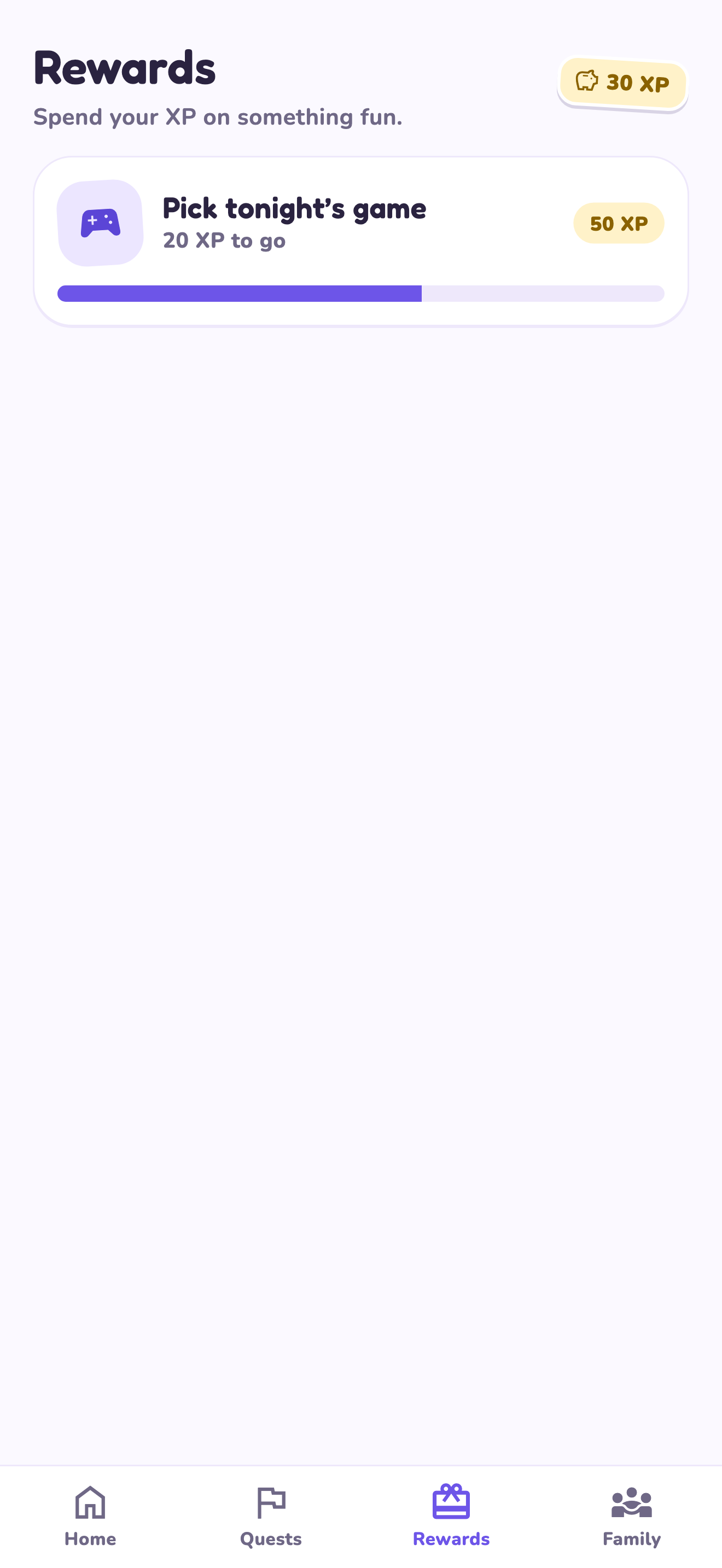
LvlUpKids turns responsibilities into quests, lets a child submit finished work, and lets a parent review it before approved XP goes toward a family-chosen reward. See how LvlUpKids turns chores into parent-approved quests, XP and chosen rewards.
The website template is separate from your account. Edit and print locally, then manually enter selected tasks in the app if you want the quest workflow. There is no automatic import, account save or AI connection on these pages.
Explore the chore app · Free to download, with in-app purchases. Check the store and purchase screen for current device requirements and terms.