Frequency follows need, not empty boxes
Daily tasks usually deal with daily use: a plate after a meal or clothes after changing. Weekly and as-needed jobs maintain something that does not require the same attention every day. Check the total load across the week before filling a chart. If the same task is often unnecessary, reduce its frequency rather than treating an empty tick box as a failure. Adults remain responsible for tasks involving hazards or essential care that cannot wait.
A worked family example
Put used clothes in the hamper each day; help sort a load with an adult once a week. Do not duplicate the full laundry job on every daily chart.
A plan to adapt
| Part of the plan | A concrete choice |
|---|---|
| Daily | Used clothes into the hamper |
| Weekly | Sort a suitable portion of clean laundry with help |
| As needed | Return borrowed books before the next visit |
| Adult-only | Hazardous or time-critical care tasks |
Try this in your household
- List when each household need actually arises.
- Sort daily, weekly, as-needed and adult-only jobs.
- Check the child’s total weekly workload.
- Remove repetitions that do not serve a real need.
Where the app can help
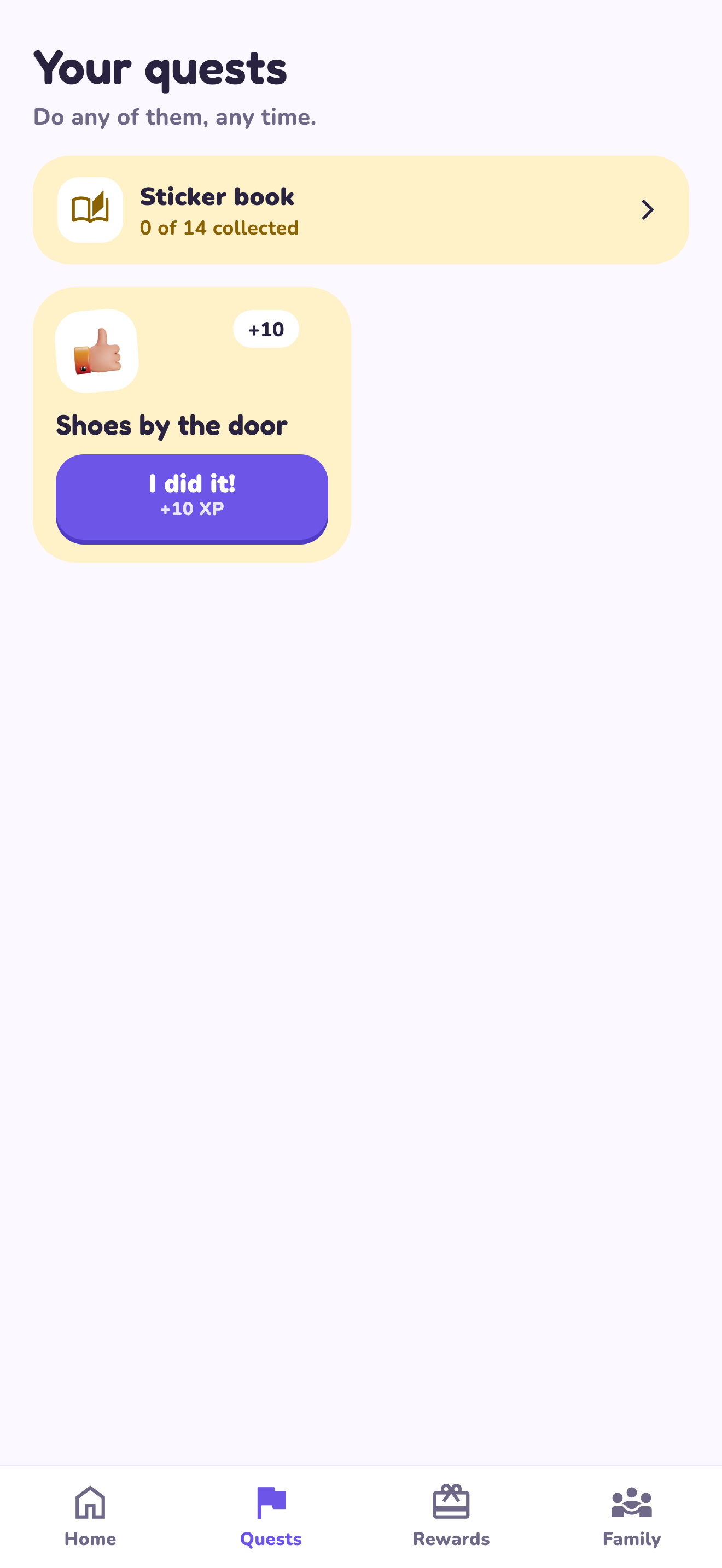
LvlUpKids turns responsibilities into quests, lets a child submit finished work, and lets a parent review it before approved XP goes toward a family-chosen reward. See how LvlUpKids turns chores into parent-approved quests, XP and chosen rewards.
The website template is separate from your account. Edit and print locally, then manually enter selected tasks in the app if you want the quest workflow. There is no automatic import, account save or AI connection on these pages.
Explore the chore app · Free to download, with in-app purchases. Check the store and purchase screen for current device requirements and terms.