Make the family rule easy to explain
Some families reward selected responsibilities, some distinguish optional extras and some use a plain contribution checklist. Choose a rule you can explain consistently. Avoid moving a task from ‘ordinary contribution’ to ‘paid extra’ only during a disagreement. Teaching time also matters: a task being learned may need practice and adult support before it fits any reward agreement. Keep basic belonging and care outside these categories.
A worked family example
Everyone puts their own used clothes in the hamper; helping with an extra shared sorting project has a separately agreed reward. Essential care and belonging never depend on points.
A plan to adapt
| Part of the plan | A concrete choice |
|---|---|
| Ordinary contribution | Put your own used clothes in the hamper |
| Learning/practice | Sort a small portion with an adult |
| Optional extra | An additional shared project with an advance reward agreement |
| Always unconditional | Care, belonging, meals, affection and rest |
Try this in your household
- Choose the household approach together.
- Sort a few concrete tasks into clear categories.
- Explain the rule before assigning work.
- Review whether it still fits after trying it.
Where the app can help
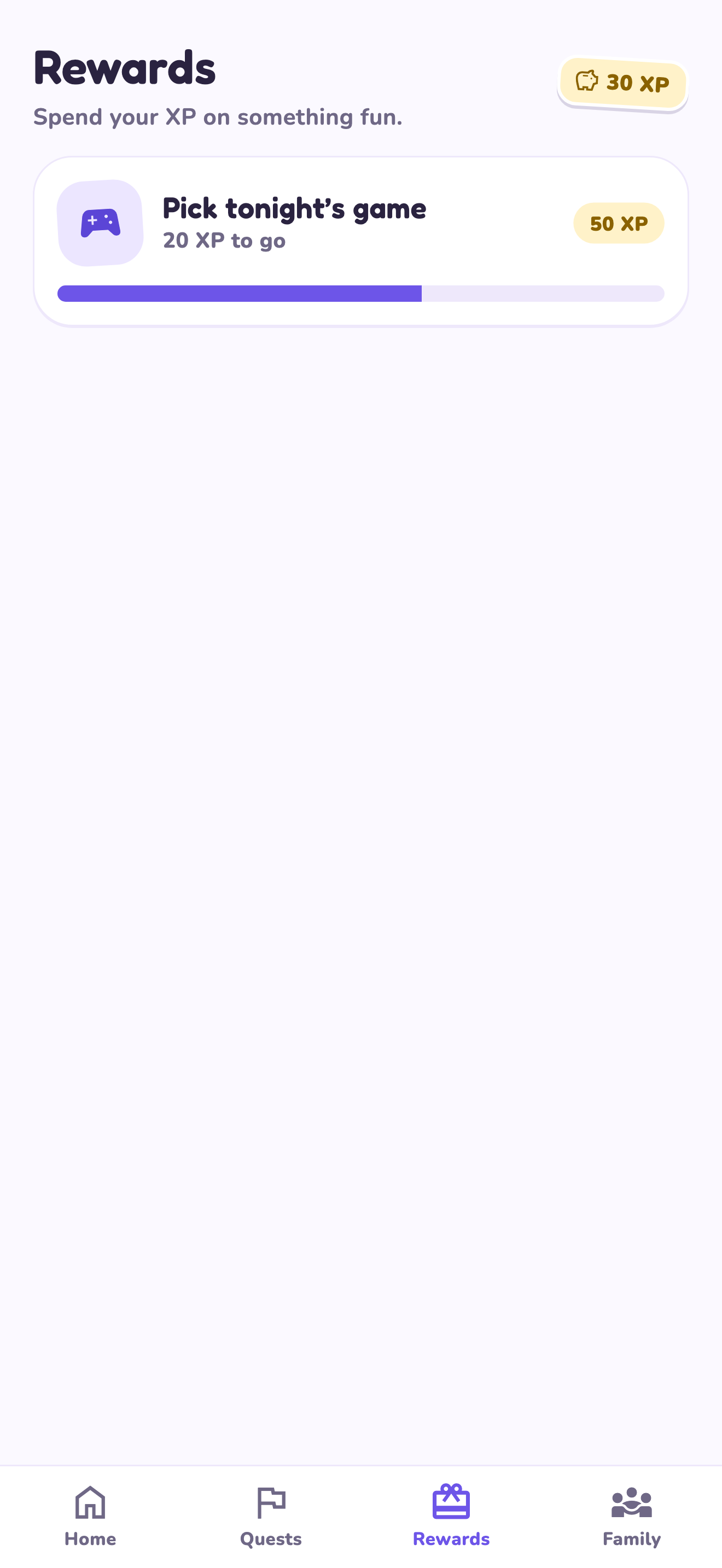
LvlUpKids turns responsibilities into quests, lets a child submit finished work, and lets a parent review it before approved XP goes toward a family-chosen reward. See how LvlUpKids turns chores into parent-approved quests, XP and chosen rewards.
The website template is separate from your account. Edit and print locally, then manually enter selected tasks in the app if you want the quest workflow. There is no automatic import, account save or AI connection on these pages.
Explore the chore app · Free to download, with in-app purchases. Check the store and purchase screen for current device requirements and terms.