
The useful job is learning where to check a symbol's meaning. It is separate from choosing a route, judging whether a place is safe or giving a child permission to go somewhere alone.
Choose a map with an answer you can check
Use an adult-checked visitor map, a school activity map or a simple pretend map. Keep its title and key together. If the print is too small, use a clearer copy rather than turning the exercise into a reading test. A child can point, describe or ask the adult to write a label.
The National Park Service's map lesson includes identifying familiar places, representing them with shapes or colors and creating a map key. PBS KIDS for Parents offers activities involving maps and landmarks. These sources support discussing map features together. The short prompts and fictional example here are original practice ideas, not a tested program or a promise of navigation readiness.
Where in the World: Maps, National Park Service · Which Way? Map Activities for Kids, PBS KIDS for Parents
Start with the key, then look back at the map
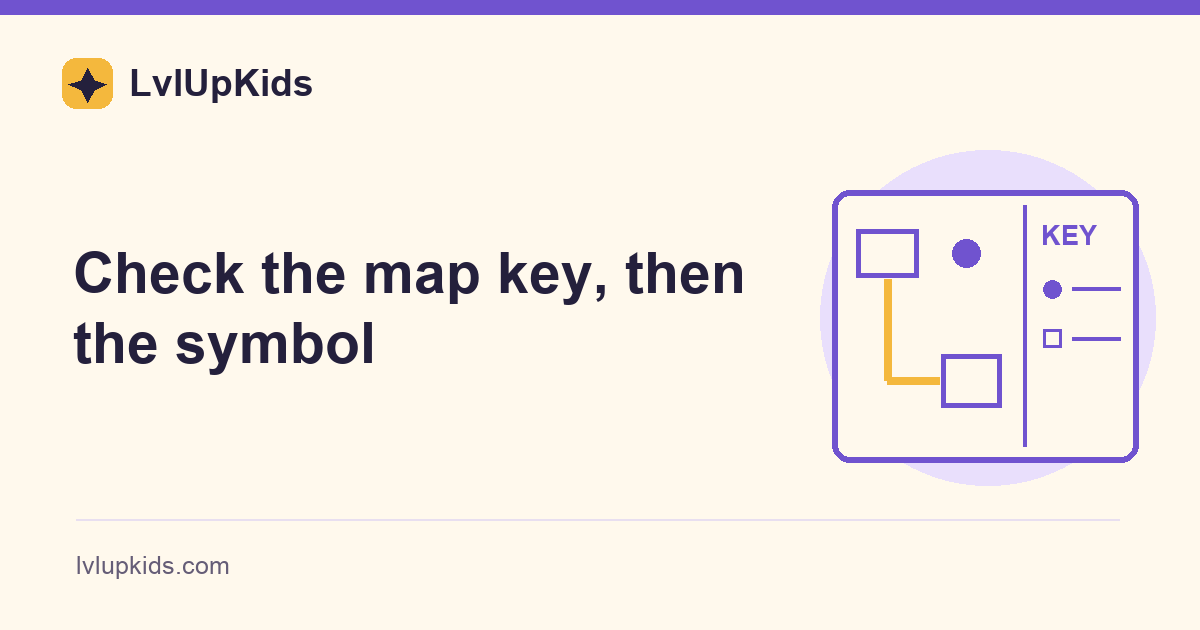
Ask, “Where does this map explain its pictures, shapes or lines?” Show the section called the key or legend if the child does not find it. Choose one entry with a symbol you can clearly identify elsewhere on the page.
Read the explanation together. Then look back at the map and find the matching mark. Ask, “What does this mark mean on this map? Where did we check?” The adult can model moving a finger between the symbol and its explanation.
Do not insist that a familiar-looking picture must mean what the child first guesses. The point is to use the explanation supplied with this particular map. If there is no clear match, leave it as a question rather than inventing a meaning.
Try one small example before adding a route
Draw a pretend reading-room map with three labeled places: an entrance, a desk and a book shelf. Add a star by the desk and a key that says “star: ask here.” Keep the drawing fictional, without a real address, school name or home layout.
An example conversation:
- Adult: “What could the star mean?”
- Child: “Something special?”
- Adult: “Let's check the key. It says ‘ask here.’ Which place has the star?”
- Child points to the desk.
- Adult: “Yes. We checked the key instead of having to guess.”
A child who does not read the words can match the shape while the adult reads. There is no need to add compass directions, coordinates or distance calculations to finish this first exercise.
Keep an unclear mark as an unanswered question
If two marks look similar, compare them with the key together. You can enlarge the page or choose a clearer example. If the key is missing or the meaning remains uncertain, stop that question. “We need a clearer explanation” is a useful answer.
Do not draw a route through an unknown area to test the guess. On an actual outing, the responsible adult checks the current map, conditions, access and supervision arrangements separately. A child's success with a paper symbol does not settle those decisions.
Finish with one thing the child can show
Ask your child to show a symbol, point to its explanation and say or indicate what it means. Then let them choose whether to try another. One checked example can be enough; speed and independent reading are not the goal.
For practice interpreting a different kind of information, try reading a weekly family calendar. For choosing something to read together, use the library-book selection guide. Those are separate activities, not extra steps required to complete this map exercise.